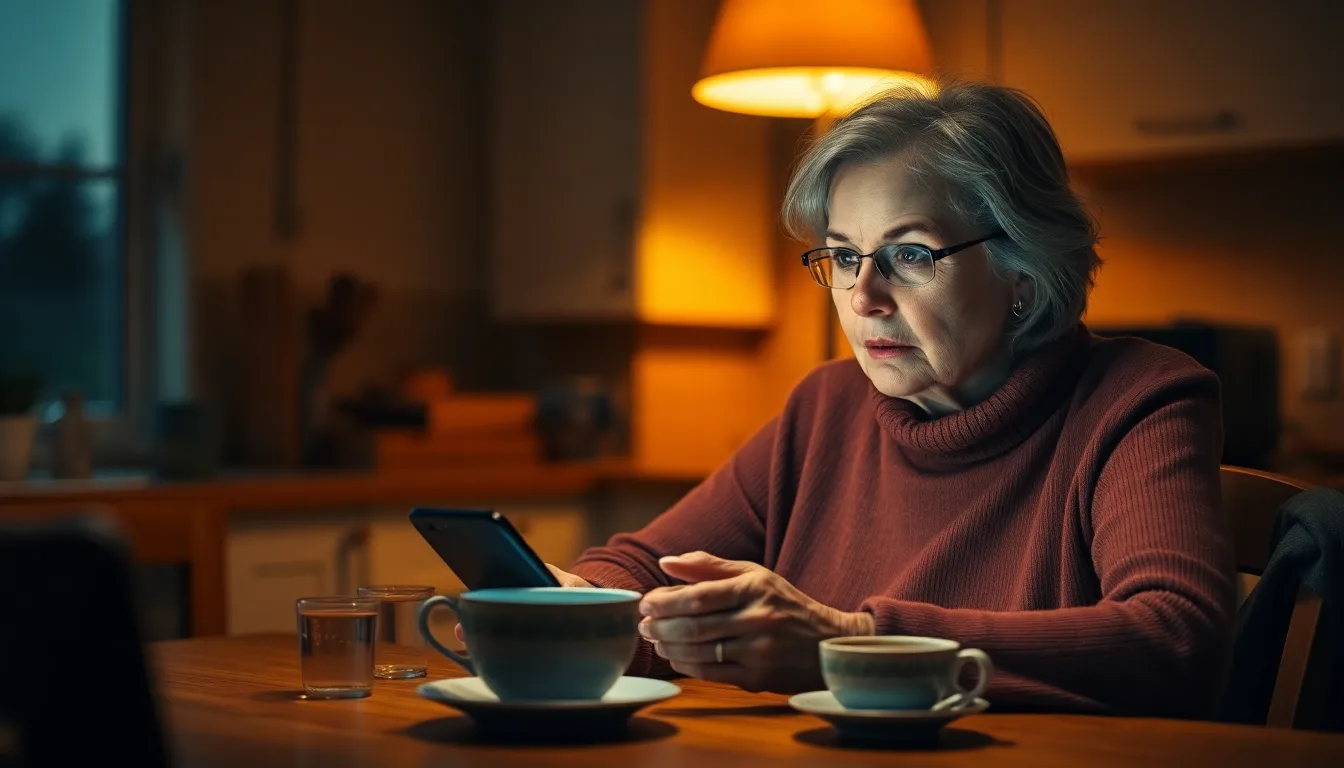
You are not the target audience because you're lonely or gullible. You are the target audience because you're an adult with some savings, some equity, an active dating profile, and a life that has recently had a door open in it — a divorce, a bereavement, a move, a retirement. Those are public signals. The people running romance scams read them professionally.
This article will not insult you with "just use common sense." That advice is what these scams are engineered to defeat. The people working them have studied how kind, careful, experienced adults make decisions, and they've built a playbook specifically for the ways mature singles want to trust.
Here is what that playbook looks like, in practice. Reading this before you encounter it is worth an hour of your time.
The Shape of a Modern Romance Scam
It is not the Nigerian prince email. The sophisticated version runs like this:
You get a match, or a friend request, or a message, from someone who looks reasonable in photos. Their profile is sparse but plausible. Their messages are literate. They're attentive without being pushy. They say they're a widower, or divorced, or a military officer stationed abroad, or an engineer working on an international contract, or a doctor with a private clinic. They live somewhere that would make it hard for you to meet quickly — another country, a remote assignment, an offshore project.
Within the first two weeks, the relationship intensifies. Daily messages. Long calls. They're texting you before bed and when they wake up. They have, they tell you, never felt this way so quickly. You feel seen in a way you haven't in a long time. You are not stupid for feeling this. It is engineered carefully to produce exactly this feeling.
Then, somewhere between week three and week twelve, a problem arises. A customs fee they can't pay. A medical emergency with a family member. A frozen account they need to access to complete a project. An unexpected fine. An "investment opportunity" they can get you into. They don't want your money, exactly — they are embarrassed, they insist, to even ask. They just need a short-term loan. They'll pay it back next month when they return, or when the contract settles.
That is the whole play. Every detail above has been refined over years of professional work.
The Red Flags That Actually Matter
Forget the "common sense" list. These are the patterns that are specifically diagnostic of a scam:
- Their life keeps them from meeting you. Always. The oil rig. The military post. The engineering contract. The child's medical treatment overseas. Every time you propose meeting, there's a new reason it can't happen. This is not a coincidence. It is the scaffolding.
- Their photos look right in a suspicious way. Often professional. Often in uniform or in what looks like a business setting. Often just a handful, and none of them are casual candid shots.
- They move fast emotionally. "I feel like I've known you for years." "I never thought I'd feel this again." "You are my queen / my king." Within two weeks. At fifty-five, a real new partner is more cautious than that. They are testing you, not sweeping you off your feet.
- They ask you questions but deflect yours. They want to know about you — your family, your routines, your house. But specific questions back at them get vague answers. "I'll tell you everything when we meet." "It's hard to explain over text."
- Their written voice shifts. Messages are sometimes oddly formal, sometimes full of typos, sometimes clearly from a different writer. This is because they often are — multiple operators using the same profile.
- A crisis appears. This is the moment of truth. Any request for money, any request for a gift card, any request for cryptocurrency, any request to help them move money through your account — this is where the scam executes. If it hasn't happened yet, it is coming.
- Refusal to video call, or consistently bad excuses for why video isn't possible. The camera is broken. The hotel wifi won't support it. They'll do it next week. A real person you've been texting for a month will do a video call.
The One Test That Usually Settles It
If you suspect you're in one of these, try this: ask for a short, casual video call. Not a date. Not a long conversation. Five minutes. Right now, or in the next twenty-four hours.
Watch how they respond.
A real person, whatever their schedule, can manage a five-minute call in the next day. They might say "not right now, I'm at work, how about tomorrow morning?" A scammer will say something that defers the call indefinitely. They'll propose a video call "when I'm back from the offshore project next month." They'll say their camera is broken. They'll send a pre-recorded video instead. They'll get oddly defensive about being asked.
If someone has been texting you for three weeks and cannot do a five-minute video call in the next twenty-four hours, they are almost certainly not who they say they are. That one test solves an enormous percentage of these.
What They Exploit About Your Generation
Let's name it, with respect. The people running these scams are exploiting a few things that are specifically more common in people over fifty:
- Politeness. Adults your age are often reluctant to simply stop replying to someone, even when something feels off. You feel you owe them a response. You don't. Silence is a complete, polite answer.
- A desire to give someone the benefit of the doubt. You have learned, in your life, that first impressions can be wrong. That good people can have strange stories. This generally serves you well, and these scams are engineered to exploit it.
- A reluctance to admit being "taken." Shame keeps victims from telling friends or family what's happening, which is exactly the isolation the scammer needs. The scam depends on you not getting outside opinions.
- Technical inexperience with signs of scale. Reverse image searches are new to many adults. The scam relies on you not Googling the profile photo.
Practical Protection
A short, real list:
- Reverse image search any new match's photos. Right-click the photo, save it, upload to Google Images or TinEye. If the same face is on thirty other profiles under different names, you have your answer.
- Never send money or gift cards to someone you have not met in person. No exceptions. No "I'll pay you back." No "it's an emergency." Not to someone you have been talking to for three months. Not to someone you believe you're in love with.
- Never move the conversation to encrypted-only messaging early. Scammers often push to get you onto an app with no trace. Stay on the dating platform for a while.
- Tell a friend or family member about anyone serious before you're six weeks in. Your sister or your best friend has the advantage of not being in love with them. They will spot patterns you won't.
- Video call early. Really early. Within the first two weeks. If someone resists, that's your answer.
- Google their name and known details. Real people leave traces. An engineer with twenty years' experience has a LinkedIn. A doctor has a published address. A military officer has a verifiable chain.
If It Has Already Happened
If you've already sent money, or are in the middle of a conversation that is clearly this pattern — please, read this carefully.
You are not stupid. You are the victim of a professional operation. Report it to your country's fraud unit or police. Report it to the platform where you met. Tell one trusted person today. Do not send anything more. Do not respond to further requests, even threatening ones. The threats are part of the script.
Then, with whatever professional help you can get, recover. Financially if possible. Emotionally if not. People who have been through this are not a small, shameful minority. They are in the hundreds of thousands.
One Thing to Do This Week
If there is someone in your dating app inbox right now who has not video-called you, has not met you in person, and has been escalating emotionally fast — ask for a five-minute video call in the next twenty-four hours.
If they agree and the call is real, you've confirmed a promising match. If they dodge, you've saved yourself from a much more expensive confirmation later.
A real person can show you their face. Anyone who can't, can't be your person. Whatever the story.